Food Manufacturing Business Model: From Raw Ingredients to Profitable Products
The food manufacturing business model converts ingredients into products that buyers can store, distribute and sell. Centiki Foods provides a fictional example of grain processing, baking and packaged foods. In reality, a flour mill, bakery, frozen-food processor and private-label packer can have very different capital needs. The core economic question is the same: can the selling price cover ingredients, labor, facilities, packaging, distribution, waste and financing, with a sustainable return left over?
A prospective founder should begin by choosing a product and a customer rather than announcing a factory. A wholesale bakery serving restaurants operates differently from a branded food business that sells through supermarket chains. The factory creates the goods; the distribution and customer relationship turn them into revenue.
Understand the size and structure of the food economy
USDA’s revised Food Dollar research reports that U.S. consumers spent $2.58 trillion on food in 2024, including imported food. For domestically produced food, the farm establishment share was 11.8 cents of the consumer dollar and the post-farm marketing share was 88.2 cents. The marketing share includes many services, so it must not be confused with manufacturer profit. [Source 1]
Another USDA breakdown assigns 16.1 cents of the 2024 domestic food dollar to food-processing industry value added. This is the value of industry activity in the supply chain, not a food company’s net margin. The distinction matters: a processor may handle enormous volumes while retaining only a comparatively small profit after all expenses. [Source 2]
These sector-level figures provide context; they do not predict the economics of a particular wheat mill or bakery. A useful business plan relies on product-specific supplier quotes, trial production yields, staffing schedules and realistic prices from actual prospective customers.
Business models a founder can choose
An ingredient processor cleans, mills, blends or otherwise prepares raw commodities for downstream manufacturers. It frequently competes on throughput, consistency, specification and delivery reliability. A private-label manufacturer makes food for customers who own the brand, earning revenue through contracts and production fees.
A branded manufacturer controls packaging and marketing and sells through distributors, retailers or directly online. It may obtain higher prices but bears advertising, promotional, returns and retailer-relationship costs. A local wholesale bakery delivers more frequently over shorter distances, while a shelf-stable packaged-food business spends more on packaging and trade marketing.
The beginner’s decision is therefore not merely which food is attractive. It is where in the supply chain to participate, who carries inventory, who owns the brand and who is responsible when a product is rejected or recalled.
From commodity to customer: map the workflow
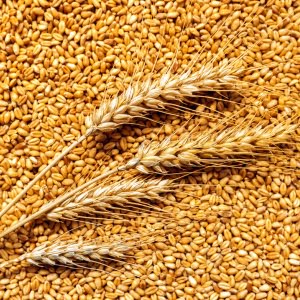
For a grain-related business, the workflow might include procurement, receiving and inspection, storage, milling or blending, quality checks, packaging, finished-goods storage, transport and customer invoicing. Each additional stage changes cash needs and possible losses.
Yield is crucial. If a plant buys 1,000 kilograms of input material, it should not assume it can sell 1,000 kilograms of finished goods. Moisture, cleaning, trimming, spillage, processing byproducts and quality rejects all matter. Some byproducts may have market value, but they should be documented rather than treated as automatic revenue.
Production planning has to match order sizes and shelf life. Excess output ties up cash and may spoil. Insufficient output causes missed delivery commitments and potentially loses recurring accounts. Temperature, sanitation and allergen-management needs depend on the actual product.
Equipment, people and startup costs
Typical capital categories include suitable premises, processing equipment, scales, packaging equipment, storage, sanitation facilities, laboratory or outsourced testing, software, insurance and working capital. Power, water, maintenance and waste handling can be material running costs.
Plant requirements vary radically by category. A contract-produced dry mix may avoid owning a processing line at first; a high-volume automated food plant may require significant capital before the first invoice. The correct method is to obtain comparable supplier quotes and estimate installation, commissioning, training and ongoing maintenance.
Personnel needs also depend on throughput and complexity: operations management, production workers, quality assurance, maintenance, procurement, sales and recordkeeping. An understaffed quality system may create more financial risk than an understaffed marketing function.
Food regulation is part of operating economics
The U.S. Food and Drug Administration explains that many domestic and foreign food manufacturing facilities must register with the FDA, subject to specified exemptions. Registered facilities may face preventive-controls obligations under the Food Safety Modernization Act. The precise requirements depend on the business and product. [Sources 3 and 4]
A covered food safety system can include hazard analysis, sanitation, monitoring, supplier controls, records and recall planning. These are not optional embellishments in a real manufacturing plan. The company must budget for training, documentation, testing and specialist support rather than assume that a license alone makes production compliant.
This article discusses U.S. federal principles and is not a jurisdiction-specific compliance checklist. State and local requirements, labeling rules, food categories and trade arrangements can add obligations.
Gross margin, contribution and pricing
Food producers frequently confuse a markup with a margin. If a unit costs $2.00 to make and is sold for $3.00, the markup on cost is 50 percent, but gross margin on sales is only 33.3 percent. Neither number includes all corporate expenses unless the cost model explicitly incorporates them.
The selling price must also account for where the product is sold. A retailer’s shelf price is not the manufacturer’s revenue. Distributor and retailer margins, promotions and allowances may sit between the factory and the end consumer. Quoting a supermarket shelf price as factory sales revenue overstates the producer’s earning power.
For an integrated explanation see Revenue, Expenses, and Profit and Pricing, Competition, and Market Share. They explain why volume, customer concentration and channel choice are central to the food manufacturing business model.
Worked example: a hypothetical packaged-grain processor
This example uses assumed numbers to teach bookkeeping and capacity economics; it is not a published industry benchmark. Assume a producer sells 100,000 packages a month to wholesale customers at $2.40 per package. Each package requires $0.90 of ingredients, $0.25 of packaging and $0.35 of other variable processing and logistics expenses.
| Monthly measure | Illustrative calculation | Amount |
| Wholesale revenue | 100,000 × $2.40 | $240,000 |
| Ingredients | 100,000 × $0.90 | $90,000 |
| Packaging | 100,000 × $0.25 | $25,000 |
| Variable processing/logistics | 100,000 × $0.35 | $35,000 |
| Contribution | Revenue − variable costs | $90,000 |
| Fixed plant/payroll/overhead | Assumed | $65,000 |
| Operating result before tax and interest | $90,000 − $65,000 | $25,000 |
Contribution per package is $0.90. At fixed costs of $65,000, monthly operating break-even is $65,000 ÷ $0.90 = 72,223 packages rounded up. At 75,000 packages, operating surplus would be only $2,500. If wholesale customers demand a ten-cent price concession, monthly contribution at 100,000 packages falls by $10,000.
The annualized operating result at the baseline volume would be $300,000 before financing, taxes and extraordinary losses, assuming every month is identical. Real demand and production rarely behave so neatly. The point of the example is to demonstrate the levers, not to suggest a guaranteed food-manufacturing profit.
Cash flow: profitable orders can still strain the business
Assume customers pay 45 days after delivery while grain, packaging and payroll must be paid sooner. The company has to finance purchases and wages before receiving the sales proceeds. A large new order may increase book profits and simultaneously exhaust cash.
Working capital planning tracks raw inventory, finished goods, accounts receivable, supplier credit and cash reserves. Strong wholesale contracts should specify order forecasts, acceptance criteria, payment deadlines and responsibility for damaged goods. A contingency plan matters because recalls, delayed deliveries and production interruptions can occur.
The Cash Flow, Working Capital, and Bankruptcy lesson explains the accounting mechanics. An entrepreneur can explore the abstract consequences of financing choices in the fictional Centiki Exchange, but simulated credit is not a substitute for a real bank’s underwriting.
Competitive advantage and growth
A new entrant rarely wins by copying a giant producer’s commodity offering. Defensible niches may involve short production runs, unusual specifications, reliable local delivery, certified specialty products or a distinct distribution relationship. Each advantage should be measured against its cost: customization can reduce line efficiency, while short delivery windows raise logistics expense.
Expansion should follow profitable, repeatable demand. Adding a second shift might increase capacity without building a new plant, but only if staffing, maintenance, utilities and food-safety controls can keep pace. A new factory is a much larger and less reversible decision.
An owner considering growth should calculate contribution per additional unit, investment required to unlock capacity, likely customer retention and the time needed to turn receivables into cash. These considerations connect directly to Business Growth, Valuation, and Investment.
What this teaches about Centiki Foods
Centiki Foods is a fictional case study in buying inputs, adding value and selling a standardized product at a profit. It shows why scale is useful only when the company can sell the extra output, maintain quality and finance its operating cycle. The broader concepts form part of the Business 101 curriculum; the company economics can be explored experimentally at Centiki Exchange.
Sources and verification
Sources below support the stated industry figures and regulatory descriptions. The financial examples in this article are explicitly hypothetical and do not represent average results or business forecasts.
- USDA ERS: Food Dollar, Summary Findings (2026 update)
- USDA ERS: Industry groups contributing to the 2024 food dollar
- FDA: How to Start a Food Business
- FDA: FSMA Preventive Controls for Human Food
- FDA: Food Facility Registration, July 2026 guidance
Class dismissed
The lesson ends here. The Centiki world continues beyond the classroom. Centiki Exchange offers a fictional market where ideas, financing and company ownership can be explored with virtual assets. For a different route through the world, enter the Centiki labyrinth trailhead or explore the fictional State of Felicia. The Exchange is the practical playground for readers who want to test the economic ideas discussed above.
Centiki Exchange is a game and educational simulation; its virtual currency and shares have no monetary value, are non-redeemable and confer no real ownership or profit rights.