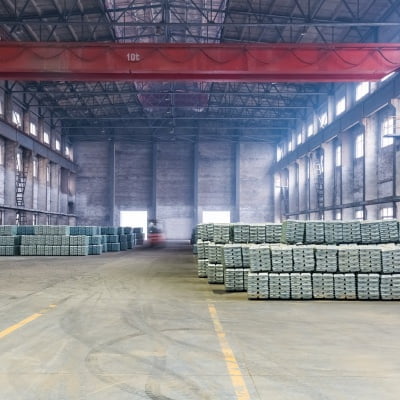
Centiki Metals FIR004
How a metals manufacturing business converts materials, energy and capital into saleable products
The opportunity: which metals business?
A metals manufacturing business makes money by turning purchased ore, scrap or intermediate metal into products that industrial customers can use. That simple description hides several distinct enterprises. One company may operate a steel mini-mill; another may refine copper, cast aluminum, roll sheet, forge components, or serve customers as a metal service center. Each earns revenue differently and requires a different level of capital. Centiki Metals FIR004 provides a fictional doorway into these real industrial economics.
A steel plant is usually not an easy first venture: furnaces, power supply, environmental controls and safety systems demand major investment. A smaller entrepreneur might enter through cutting, machining, coating, fabrication or specialized distribution. The first strategic choice is therefore not “Which metal is most valuable?” but “At what stage in the value chain can this company compete profitably?”
Industry scale: facts, not startup forecasts
The World Steel Association reports world crude-steel production of approximately 1,849 million metric tonnes in 2025, compared with roughly 1,887 million tonnes in 2024. These are production volumes, not business revenue or profit. The large scale of global output demonstrates the depth of the market, while the year-to-year decline illustrates that demand is cyclical rather than guaranteed. Source: World Steel in Figures 2026 [1].
The U.S. Geological Survey’s Mineral Commodity Summaries 2026 covers more than 90 nonfuel mineral commodities and reports production, trade, prices, reserves and other statistics. Entrepreneurs need commodity-specific data: copper demand cannot be inferred from the steel market, and the economics of aluminum refining differ from those of steelmaking. Source: USGS [2].
International aggregates are useful context but cannot predict a local mill’s selling price. The relevant market may be regional because moving heavy, low-value material long distances incurs freight expense. A specialist metal product, on the other hand, can compete across borders when quality and certification outweigh transportation costs.
The metals value chain
1. Raw materials and procurement
Steel producers buy iron ore, metallurgical coal, metallics or scrap according to their process. Aluminum producers require alumina or recycled feedstock; copper fabricators may buy cathode, rod or scrap. Procurement contracts must specify composition, contamination thresholds, moisture, delivery schedules and payment terms. A cheap shipment can be expensive after sorting, processing loss and transport.
2. Smelting, refining and melting
Metallurgy involves physical and chemical processes that transform raw inputs into metals or alloys with specified properties. Conventional ironmaking commonly uses a blast furnace and basic oxygen furnace. Electric arc furnaces melt metallic feedstock, often scrap. Electrolysis is central to primary aluminum production and some refining processes, but it is not the universal route for every metal. The product’s legacy tags capture some of these methods; a complete lesson distinguishes them.
3. Casting, rolling and finishing
Molten metal may be cast into slabs, billets or other shapes, then rolled, extruded, forged, machined or coated. Final customers often buy a specification rather than a generic commodity: thickness, tolerance, corrosion resistance, tensile strength, test certificate and delivery reliability determine whether a product can be used. Quality failures can make an otherwise profitable contract uneconomic.
4. Distribution and technical service
Service centers purchase standard stock, store it, cut it to order and deliver small lots promptly. They compete through inventory availability and convenience rather than through ownership of a mine or smelter. This model requires less process infrastructure than steelmaking, but still absorbs substantial working capital because metal must be paid for before the customer pays the invoice.
What determines operating cost?
The principal variable costs include feedstock, electricity or other fuel, consumables, freight, coatings, packaging and processing yield losses. Fixed and semi-fixed costs include plant buildings, maintenance teams, administrative salaries, equipment depreciation, environmental compliance, insurance and interest on finance. In high-temperature processes, equipment utilization matters: production interruptions leave costly assets idle while many expenses continue.
The U.S. Department of Energy notes that remelting scrap in electric arc furnaces uses less than half the energy needed for making steel from iron ore by the blast-furnace/basic-oxygen route, and describes electric arc furnaces as an important part of U.S. steel production. This compares steel production routes, not the complete lifecycle of every metal product; electricity source, feedstock quality and plant configuration still matter. Source: DOE [3].
From selling price to operating profit
For a basic unit calculation, net sales per tonne minus delivered metal input cost, conversion expenses and variable freight gives contribution per tonne. Multiply contribution by tonnes sold, then deduct fixed operating costs to estimate operating profit. If inventory is acquired before it is sold, financing expense and cash tied up in stock must also be considered.
Price volatility introduces a second risk. When a firm quotes a fixed price to a customer but has not locked in its input cost, a market increase can erase the margin. When it buys costly inventory and the market falls, customers may demand lower prices before the inventory is sold. Contracts, stock discipline and pricing formulas can reduce some of that exposure, but not remove it.
Worked example: a hypothetical metal-processing company
This is a teaching model for a small metal-processing operation, NOT a reported industry benchmark, real equipment quotation or profitability forecast. Assume the firm purchases standard metal stock and cuts it for commercial customers. Values are in U.S. dollars per month; no mining or primary smelting is included.
| Monthly item | Hypothetical amount |
| Sales: 120 tonnes × $1,500 | $180,000 |
| Purchased metal: 120 tonnes × $1,050 | $126,000 |
| Variable cutting, freight and consumables | $12,000 |
| Contribution after variable costs | $42,000 |
| Fixed labor, rent, insurance and administration | $28,000 |
| Operating profit before interest and tax | $14,000 |
The illustrative contribution is $350 per tonne ($42,000 ÷ 120). If fixed monthly costs are $28,000, break-even volume under these assumptions is $28,000 ÷ $350 = 80 tonnes. At 120 tonnes, the operating margin is $14,000 ÷ $180,000 = 7.8%. These results do not include debt interest, tax, capital expenditure or an owner distribution; a real decision requires supplier quotes, verified yields and customer contracts.
Now consider a 10% rise in purchased metal cost without a corresponding selling-price increase. Material cost becomes $138,600, reducing operating profit to $1,400. Conversely, a 10% rise in selling price, if demand and volume held constant, would change the economics significantly. Neither outcome is guaranteed: customer demand and rival prices determine how much of a change can be passed through.
Cash flow: why profitable metal firms can still fail
Inventory and receivables can absorb more cash than the income statement suggests. Assume a customer receives a 45-day payment term while the supplier requires payment in 15 days. For 30 days, the processor may be financing materials and production out of its own working capital or a credit line. Even when the sales margin is positive, late customers can create a liquidity crisis.
Track inventory turns, scrap loss, accounts receivable days, accounts payable days and gross margin by order. A lender will want to know whether inventory is readily saleable, whether a few customers account for most receivables, and whether price changes can destroy collateral value. The Business 101 lessons explain these distinctions in more detail.
Recommended lessons: Cash Flow, Working Capital, and Bankruptcy | Revenue, Expenses, and Profit | Capital, Equity, and Commercial Borrowing
Capital requirements and entry strategy
A metals venture might begin as a distributor, machining shop, fabricator, small foundry or fully integrated mill. Each requires a different financing plan. Compare equipment acquisition or lease, location, power availability, emissions and waste permitting, handling equipment, working capital, staff training, testing and quality requirements. For products used in critical structures, customer approvals and traceability can be barriers to entry.
The plan should specify intended customers and grades, suppliers, minimum order sizes, a costed process flow, expected scrap rate, energy costs, credit terms and a credible sales pipeline. A compact fabrication enterprise may be feasible with comparatively modest capital; a new primary smelter can demand industrial-scale resources. Avoid borrowing a “typical startup cost” from another metal segment.
Competition, environmental requirements and risk
Metals are cyclical. Construction, vehicles, machinery, power equipment and exports influence demand. Producers compete on price, but specialized manufacturers may win on metallurgical expertise, short lead times and consistent certification. Energy price spikes, mechanical downtime, contamination and trade measures are common sources of unexpected cost.
Real facilities also face workplace-safety, air-quality, waste and water obligations, which depend on location and process. A business plan must price the applicable requirements rather than treat compliance as a generic overhead percentage. The distinction between low-capital distribution and primary smelting is as important legally as it is financially.
Decision checklist for a prospective entrepreneur
- Choose one defined product and customer group, not “metals” in general.
- Identify the production step you will actually own: purchasing, processing, finishing or distribution.
- Obtain dated, comparable supplier prices and ask how price changes pass through to customers.
- Estimate recoverable output after yield loss, defects, rejects and scrap.
- Model operating profit separately from inventory financing and cash flow.
- Verify process-specific permits, quality tests and safety requirements before setting a launch date.
Class dismissed
The metal that leaves a furnace is a commodity; the choices that determine its usefulness make it a business. After this lesson, follow the fictional Centiki trail if you want to see how economic choices can become part of a game.
Business is serious. Learning does not have to be. Follow the trail from the classroom to the broader Centiki world: Centiki Labyrinth Trailhead or explore the Centiki Exchange. The Exchange is a fictional simulation; its ki and shares have no monetary value, cannot be redeemed, and confer no ownership or profit rights.
References and further reading
Published figures refer to the cited year and geography. Hypothetical numerical examples in this article are teaching models, not industry averages, price quotations, or investment forecasts.
[1] World Steel in Figures 2026 — World Steel Association. 2025 world crude steel production and historical volume comparisons.
[2] Mineral Commodity Summaries 2026 — U.S. Geological Survey. Commodity-by-commodity production, market and trade data.
[3] Iron and Steel Manufacturing — U.S. Department of Energy. Production processes and energy-efficiency comparison.
[4] Centiki Business 101 — course index. Related lessons on operating costs, financing and working capital.