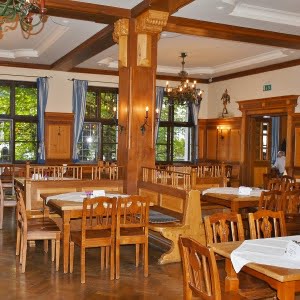
Restaurant Business Model: How a Food-Service Company Makes Money
The restaurant business model converts ingredients, skilled labor, premises and service into meals that customers are willing to purchase. A busy dining room is not automatically a profitable one. The entrepreneur must reconcile menu revenue with food, wages, occupancy costs, waste, equipment and the unpredictable pace of customer traffic. Centiki Restaurants is a fictional enterprise used to explain the economics of real food-service businesses.
Choose which restaurant business you are creating
Full-service restaurants sell a combination of food, hospitality and the dining experience. Counter-service establishments prioritize speed and high order throughput. Cafeterias and buffets offer different forms of pre-prepared selection and labor scheduling. Delivery-first kitchens depend heavily on packaging, dispatch and digital ordering. A gourmet restaurant, a salad bar and an international buffet may be marketed to the same community but have completely different staffing ratios, inventory risks and average tickets.
Revenue can come from meals, private events, catering and other lawful services. Even within a single concept, lunch and dinner may have distinct menu prices and operating costs. Before committing capital, an operator should estimate guest traffic by time of day, seat turnover, price per ticket and the share of transactions that take place away from the dining room. For the core planning method, consult Starting a Business: From Idea to Company.
How large is the market?
The National Restaurant Association’s 2026 State of the Restaurant Industry projected approximately $1.55 trillion in U.S. restaurant-and-foodservice sales for 2026, with inflation-adjusted growth of 1.3%, and industry employment of about 15.8 million people. The figures are a nationwide industry forecast, not a sales target or proof that any particular restaurant will be profitable.
Market research must be neighborhood-specific. Count the number of people who live, work or study nearby. Observe foot traffic during the proposed hours, assess parking or transit access, inspect competitors’ menus and prices, and estimate how frequently customers might return. A popular location can also demand rent high enough to erase the benefit of superior traffic.
Startup investment and why the cash reserve matters
Before opening, the owner may need a lease deposit, renovations, ventilation, refrigeration, food-preparation equipment, furnishings, point-of-sale systems, initial inventory, insurance, licenses and training. Local building and health rules determine specific requirements. The Small Business Administration startup-cost guide recommends separating one-time startup expenses from monthly recurring costs and estimating financing needs before launch.
Build a sources-and-uses schedule showing every dollar of committed funds. Include a contingency allowance for construction delays and unexpected equipment repairs. Opening with enough cash for a ribbon-cutting but not enough to pay the second month’s wages is a business-plan failure. The lesson on Capital, Equity, and Commercial Borrowing explains why owners must distinguish their own equity from debt repayments.
Menu engineering: contribution per order
A $20 entrée does not produce $20 in profit. Suppose its ingredients and packaging cost $7. Direct contribution is $13 before payroll, occupancy, utilities, service and other expenses. Different menu items may have different contributions: a high-priced dish can earn less contribution than a simpler dish if its food cost and preparation time are high. Operators should measure waste and yield rather than treat purchased food as if every gram becomes a saleable meal.
Menu engineering connects purchase prices, recipe portions, labor minutes, customer demand and achievable selling prices. Consider seasonal ingredients, supplier substitutions and what happens when a favorite item becomes much more expensive. Sales mix matters: a restaurant selling 200 inexpensive orders can earn less than one selling 120 higher-contribution orders. For broader pricing economics see Pricing, Competition, and Market Share.
Labor cost, staffing and productivity
Restaurants require staff for preparation, cooking, customer service, cleaning, stock handling and management. According to the Bureau of Labor Statistics occupational tables for May 2025, the national median hourly pay for restaurant cooks was $17.98, while the median for food-preparation workers was $16.98. These are employee wage medians, not total employer labor costs, and actual local wages may differ considerably.
Budget employer payroll taxes, benefits where offered, overtime, training, turnover and management time. Forecast staff by hour, not simply as a fixed percentage of projected revenue. A thin Monday shift and a crowded Saturday dinner require different staffing. Scheduling too little labor can damage service and food safety; scheduling too much can produce losses despite acceptable gross revenue.
Permits, food safety and operating controls
Local health departments typically oversee inspections and food-service permits. The FDA Food Code is a model used by jurisdictions, not a single nationwide restaurant license. FDA announced a 2026 edition; operators must confirm which edition and local amendments their particular jurisdiction has adopted. Food-safety training, temperature records, sanitation, allergen procedures and supplier traceability all protect customers and help prevent operational interruptions.
Management needs daily controls: sales by channel and shift, voids, food and beverage inventory, labor hours, waste and customer complaints. Preventing shrinkage and understanding discrepancies between theoretical recipe cost and actual food purchases can be more valuable than simply adding menu items.
Worked example: a neighborhood restaurant
The following monthly example is hypothetical. Assume an average ticket of $24 and 100 paid orders per day for 30 days. Assume ingredients, packaging and variable transaction costs of $9 per order, with $35,000 in monthly fixed costs including scheduled payroll, occupancy and administration. The illustration deliberately simplifies the relationship between staffing and sales volume.
| Monthly calculation | Illustrative amount |
| Orders: 100 × 30 | 3,000 |
| Revenue: 3,000 × $24 | $72,000 |
| Variable costs: 3,000 × $9 | $27,000 |
| Contribution before fixed costs | $45,000 |
| Fixed operating costs | $35,000 |
| Operating surplus before debt, taxes and depreciation | $10,000 |
Hypothetical teaching example; not a reported industry average.
Contribution per order is $15. The approximate break-even point is $35,000 ÷ $15 = 2,334 orders per month, or about 78 orders per day in a 30-day month. At 70 orders a day the model produces 2,100 orders, $31,500 contribution and a $3,500 operating loss. At 110 orders a day it produces 3,300 orders, $49,500 contribution and a $14,500 surplus. These figures are arithmetic illustrations, not average restaurant margins.
Cash flow and survival through slow months
Restaurants often receive customer payments quickly, but they pay wages, inventory and rent on schedules that do not automatically match sales. A slow season can produce shortages even if the business is profitable over a full year. Fixed lease obligations continue when traffic falls. Equipment breakdown can create a large unexpected cash payment. Prepare a rolling 13-week cash forecast and a separate monthly profit forecast; they answer different questions. See Cash Flow, Working Capital, and Bankruptcy.
Risks, expansion and an owner’s checklist
The principal commercial risks include poor site selection, high rent, inconsistent foot traffic, supply-price increases, labor turnover, weak food safety, overlarge menus and overoptimistic demand estimates. Franchising may provide processes and a recognizable concept but introduces fees and contractual restrictions. Opening a second site adds managerial complexity, not merely twice the sales.
- Define the format and customer before designing the menu.
- Verify local permits, lease conditions, equipment and build-out costs.
- Measure contribution by menu item, sales channel and daypart.
- Model slow, normal and busy months with real wage and rent quotations.
- Plan enough cash to survive launch delays and weak initial traffic.
A successful restaurant is a repeated conversion of customer demand into profitable orders, with sufficient financial discipline to survive difficult days. The fictional Centiki restaurant is a convenient entry point into real management decisions; the principles apply to small independent establishments as well as chains.
Sources and further reading
- National Restaurant Association — State of the Industry 2026
- BLS — May 2025 national wages by occupation
- FDA — Food Code and adoption information
- SBA — Calculate your startup costs
Class dismissed
Business economics is the lesson. To explore a fictional stock exchange where virtual companies, financing and ownership decisions become interactive exercises, visit Centiki Exchange. The ki and shares in the simulation have no monetary value, are non-redeemable, and confer no ownership or profit rights.
The route into the larger Centiki world begins at Centiki.com. The fictional society that grew around its economy is described at State of Felicia. For another serious lesson, return to the Business 101 course index.