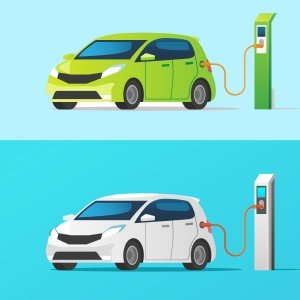
Centiki Electric Car EAR001
The business economics of designing, building and selling electric cars
What does an electric car company actually sell?
Electric car manufacturing is not simply assembling a motor and a battery. A vehicle maker sells a regulated, warrantied product supported by a supply chain, software, service infrastructure, spare parts and continuing customer obligations. Centiki Electric Car EAR001 is a fictional company used to study a real industrial challenge: how to invest enough money to build a desirable vehicle, deliver it reliably and earn a profit after paying every related cost.
There are several entry routes. An established automaker can add electric models to factories and distribution networks it already owns. A new brand may contract out manufacturing while retaining design and marketing. A specialized firm might build light commercial vehicles, retrofit fleets where legally permitted, or develop software and components for larger automakers. The financial requirements vary enormously. This article focuses on the business model of a manufacturer of battery-electric passenger vehicles and compares it with lower-capital alternatives.
A growing global market does not guarantee a profitable startup
The International Energy Agency’s Global EV Outlook 2026 reports that more than 20 million electric cars were sold worldwide in 2025, about one-quarter of all new cars. The IEA projects 23 million sales in 2026, or about 28% of the total market. These figures include battery-electric and plug-in hybrid cars, and the projection is not a realized result. Source: IEA [1].
The same IEA report estimates that nearly 22 million electric cars were manufactured globally in 2025 and that China accounted for a majority of production. A large market can produce harsh price competition. A new brand must persuade customers to trust its product while competing against established manufacturers with supplier relationships, scale and service networks. Selling more cars is not automatically the same as earning more money.
How a battery-electric car works
The U.S. Department of Energy’s Alternative Fuels Data Center explains that a battery-electric vehicle stores energy in a traction battery and uses an electric motor to drive the wheels. Key parts include the battery pack, power electronics, charging port and onboard charger, thermal management and electric transmission. Regenerative braking can recover some kinetic energy. Battery-electric vehicles have no tailpipe exhaust, but upstream manufacturing and power generation still have environmental impacts. Source: DOE [2].
This hardware is an industrial procurement problem. A vehicle producer must specify components that work together, obtain reliable supply, assemble to consistent tolerances, validate software and safety, and support repairs. A battery cheaper per kilowatt-hour may not be cheaper overall if its weight, cooling needs or performance forces major vehicle redesign.
The five major economic activities
1. Product design and engineering
Engineers choose size, range, performance, body structure, safety systems and software architecture. The company must validate prototypes before production. Research and development expenditure occurs long before there is recurring sales income. A new model needs to spread development cost across enough sales units to justify its existence.
2. Supply chain and purchasing
Purchased inputs include battery cells and packs, steel and aluminum parts, electronics, motors, tires, seats and glass. Supplier contracts specify volumes, quality and delivery reliability. A low component price does not help if defective parts trigger recalls or a supplier failure stops the assembly line. Battery supply is strategically important because cells and packs represent significant vehicle cost and can be constrained by chemistry, sourcing and trade policy.
3. Factory operations
Factories coordinate body construction, paint, assembly, testing and logistics. Capital assets continue to depreciate when the line is underused. Product quality, production rate, worker training, scrap and rework all affect contribution per vehicle. A small producer can pay much more for components and assembly than a high-volume rival, even when the finished cars appear similar.
4. Sales and customer acquisition
Vehicles may be sold through dealers, direct-to-consumer channels where lawful, fleet contracts or distributors. Revenue per vehicle must account for discounts, dealer or channel costs, returns, financing incentives and warranty promises. Marketing can be extremely expensive for an unknown brand because buyers are trusting the vehicle with a major purchase and expecting long-term support.
5. Warranty and after-sales service
Manufacturers carry obligations after the vehicle leaves the plant: repairs, recalls, software maintenance, replacement parts and warranty reserves. Service availability is part of the value proposition. Underestimating these obligations can make a seemingly profitable sale costly years later.
Battery costs and regional competition
The IEA reports that average battery prices declined by 8% in 2025, with material and manufacturing differences among chemistries and regions. It also notes that battery pack prices in China were about 30% below those in North America in 2025. Those figures describe broad market comparisons, not a guaranteed purchase quote for an individual carmaker. Source: IEA battery chapter [3].
The U.S. Department of Energy’s 2025 Incremental Purchase Cost report provides modeled high-voltage battery costs in 2024 dollars for various vehicle classes: approximately $9,185 for a compact battery-electric car, $9,929 for a midsize car and $11,032 for a midsize SUV in that methodology. These are model-specific estimates, not current retail replacement prices or universal battery invoices. Source: DOE [4].
Chemistry, battery size, purchase volume and supply contracts can change economics substantially. Comparing two quoted packs requires checking usable capacity, thermal management, warranty, testing, duties and integration cost, not only price per kilowatt-hour.
How to calculate vehicle contribution and operating profit
Per-vehicle contribution is net revenue after discounts minus the incremental costs of producing and delivering that car. These may include purchased components, assembly labor, logistics and variable warranty provisions. The amount remaining must pay for engineering, factories, administration, marketing and interest before investors can claim any profit.
Operating profit is not the same as gross profit or cash flow. A factory can report positive vehicle-level contribution while losing money overall because annual fixed costs remain high. Conversely, profitable accounting results do not guarantee spare cash if unsold inventory, new equipment and customer financing tie up funds.
Worked example: hypothetical new EV producer
The following scenario is entirely invented to teach break-even arithmetic. It is NOT a forecast, average industry figure, supplier quotation or estimate of what it would cost to establish a compliant vehicle manufacturer.
| Per vehicle / annual item | Hypothetical amount |
| Net revenue per car | $32,000 |
| Variable production, warranty and delivery cost per car | $27,000 |
| Contribution per car | $5,000 |
| Annual fixed factory, engineering, selling and admin costs | $150,000,000 |
| Break-even annual unit volume | 30,000 cars |
| At 40,000 cars: annual revenue | $1,280,000,000 |
| At 40,000 cars: annual operating profit | $50,000,000 |
At 40,000 deliveries the model contributes $200 million (40,000 × $5,000). After $150 million of fixed operating expenses, operating profit is $50 million, or approximately 3.9% of revenue. The model excludes financing costs, tax, restructuring, unusual charges and capital investment. It assumes every vehicle sells at the same net price and variable cost, which is unlikely in practice.
If variable cost rises by $2,000 and net price cannot increase, contribution falls to $3,000 per car. Break-even volume then climbs to 50,000 vehicles ($150 million ÷ $3,000). If sales reach only 20,000 cars at the original $5,000 contribution, annual operating loss is $50 million. These sensitivity cases explain why factories with high fixed costs are vulnerable to changes in selling price, component cost or production volume.
Cash needs beyond the income statement
Before collecting a single sales dollar, a vehicle firm may need prototypes, testing, production tooling, supplier deposits, factory installation, software and inventory. After deliveries begin, it must continue to buy components while funding warranty obligations and product development. The cash-flow calendar can be more dangerous than the accounting margin.
A credible capital plan contains separate estimates for engineering investment, factory and tooling expenditure, operating losses during ramp-up, working capital, interest, and a contingency reserve. Borrowing can preserve ownership but creates fixed obligations even if deliveries disappoint. Equity financing absorbs more risk but dilutes the founders. These are different tools rather than interchangeable sources of “startup money.”
Study the financing principles in Capital, Equity, and Commercial Borrowing and the liquidity principles in Cash Flow, Working Capital, and Bankruptcy.
Compliance, quality and the cost of trust
Road-legal vehicles must comply with the safety and environmental rules of their intended markets. Requirements involve vehicle certification, component standards, crashworthiness, electrical safety, recalls and recordkeeping. They are not optional expenses to be added after launch. Product liability, insurance, warranty reserves and repair access should be part of financial planning from the beginning.
A responsible assessment must also separate claims. An electric vehicle has zero direct tailpipe emissions, but lifecycle effects depend on materials, factory processes, electricity generation, vehicle longevity and recycling. Marketing language should not turn a specific technical advantage into an unsupported claim of universal environmental benefit.
A realistic route for a smaller entrant
A new entrepreneur need not begin by building an entire automobile. Businesses can specialize in battery thermal systems, motors, parts distribution, fleet software, charging services, repair equipment, vehicle refurbishment within applicable rules or contract engineering. The smaller opportunity may have fewer regulatory and capital burdens while still participating in the industry’s value chain.
The selection process should start with a clearly defined customer and measurable problem. Estimate willingness to pay, certification and testing requirements, component sourcing, cash conversion cycle and service costs. Only after validating demand should the founder consider scaling operations. The Business 101 starting-a-company and pricing lessons provide a framework for that sequence.
Related lessons: Starting a Business: From Idea to Company | Pricing, Competition, and Market Share | Business Growth, Valuation, and Investment
Decision checklist
- Choose one market segment and a target customer, not just a fashionable technology.
- Distinguish vehicle design, contract manufacturing and full-scale integrated production.
- Estimate component costs from actual quotations, including warranties, logistics and defects.
- Reconcile engineering cost, fixed factory cost and vehicle contribution with a credible volume forecast.
- Model lower sales and higher material costs, then check how long available cash lasts.
- Confirm vehicle regulation and safety testing in each intended sales market.
- Plan service, replacement parts and recalls before selling the first vehicle.
Class dismissed
Cars invite competition over speed and style. The economics are a different race: a firm must deliver the car, satisfy its customer and still have enough money to build the next one. Once the lesson ends, the Centiki world offers a different sort of test drive.
Business is serious. Learning does not have to be. Follow the trail from the classroom to the broader Centiki world: Centiki Labyrinth Trailhead or explore the Centiki Exchange. The Exchange is a fictional simulation; its ki and shares have no monetary value, cannot be redeemed, and confer no ownership or profit rights.
References and further reading
Published figures refer to the cited year and geography. Hypothetical numerical examples in this article are teaching models, not industry averages, price quotations, or investment forecasts.
[1] Global EV Outlook 2026, Executive Summary — International Energy Agency. 2025 electric-car sales and 2026 projection, with global scope and definition.
[2] How Do All-Electric Cars Work? — U.S. Department of Energy, AFDC. Technical components and battery-electric vehicle explanation.
[3] Electric Vehicle Batteries — IEA Global EV Outlook 2026. 2025 battery costs, chemistries, and regional differences.
[4] 2025 Incremental Purchase Cost Methodology and Results for Clean Vehicles — U.S. DOE. Modeled battery costs in 2024 U.S. dollars, by vehicle type.
[5] Centiki Business 101 — course index. Financing, valuation, pricing and cash-flow learning resources.