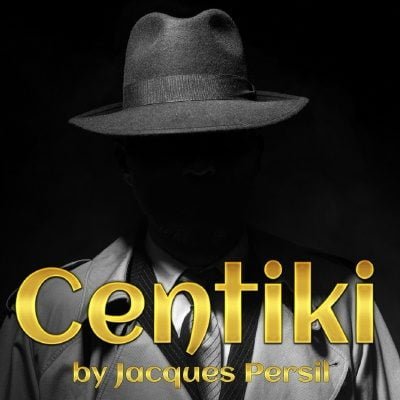
Centiki Manual Level 5
The Centiki Manual Level 5 acts as a reader’s guide to the story, the labyrinth, and a fictional economy.
Why the Centiki Manual Level 5 matters
The Centiki Level 5 game manual sits at the intersection of a novel, a network of fictional places, and an economic game. It is not a conventional instruction booklet filled with button-by-button commands. Instead, it provides the literary background that makes scattered names, institutions and clues meaningful. Readers who know the story can recognize a reference in the labyrinth that might otherwise look like decoration.
The product description on this site identifies the first four chapters of Centiki: Mirror of the State as the Level 5 manual. It describes the chapters as the bridge between the story and the game. That relationship matters: the game asks participants to pay attention, connect information and follow a trail, rather than simply purchase a shortcut. The current listing also references the Centikipedia and page 106, without publicly explaining their significance. This guide preserves that distinction between orientation and solution.
What kind of learning does Centiki Manual Level 5 support?
A clue-based game depends on three related skills. The first is observation: identifying repeated places, words, symbols and decisions. The second is interpretation: asking what those details mean in the world of the story. The third is application: using an interpretation to choose the next direction. This is a useful distinction between remembering information and reasoning from information.
The economic material adds a fourth skill: considering trade-offs. In Centiki, companies, capital, ownership, borrowing, and the distribution of opportunity are recurring subjects. Those ideas can be studied outside the fictional setting through the Business 101 lessons, then revisited as questions inside the labyrinth. A game does not prove an economic theory. It can, however, make the consequences of assumptions easier to discuss.
How the story, the rooms and the business lessons differ
The novel: context and characters
The novel is the source of the fictional history and personalities. A reader encounters institutions within a story rather than through an encyclopedia entry. That narrative perspective provides motives, conflict, irony and uncertainty, all of which can change how a later clue is understood.
The rooms: exploration and play
Centiki.xyz uses its pages as rooms. The rooms constitute the game environment, not the classroom. A visitor may choose to explore, retrace a route and test interpretations. The product listing is one part of that environment; purchasing the book is not the same thing as receiving an automatic solution.
The blog: the classroom
The educational posts explain general business ideas independently of the fiction. They cover the creation of a company, borrowing and equity, income and expenses, liquidity, pricing and growth. These topics supply vocabulary that can help readers analyze the economic choices appearing in the story. They are organized in the Business 101 index.
Begin with the Business 101 index if the business ideas are new. Readers interested in financial mechanics can proceed to capital, equity and commercial borrowing and business growth, valuation and investment.
A practical reading method that does not spoil the game
Read a section of the manual carefully, then identify the unfamiliar people, organizations, locations and concepts. Record which details appear again elsewhere. Distinguish a statement in the narrator’s voice from a claim made by a fictional character. When a room seems puzzling, return to the passage that introduced its language or imagery. An interpretation should explain several details at once; a guess that accounts for one word but contradicts the rest is weaker.
A compact notebook can help. Use four columns: reference, where it appeared, possible meaning, and what evidence would confirm it. For example, an unfamiliar institution may be a fictional organization, a satire of an established company or an echo of a real economic debate. Label the alternatives as possibilities until the text supports one. This method makes the search more satisfying without turning it into a list of answers.
How much of the game is economic simulation?
Centiki combines narrative discovery with a fictional exchange. The virtual currency, ki, is part of that simulated economy. Its token and share rules belong to the game; they are not promises of real-world financial results. Concepts such as collateral, valuation, lending, shareholder votes and business formation can be discussed in the lessons, but real companies operate under legal and accounting rules that the simulation cannot fully reproduce.
For that reason, treat any number shown in the fictional economy as a game parameter unless the accompanying text expressly identifies an external data source. A model can illustrate how a financial decision works; it does not establish the actual market value of a real company. The same distinction matters when reading Business 101 numerical examples, which are labeled hypothetical whenever they are not sourced industry measurements.
What readers should expect from a Centiki Manual Level 5 companion
- A framework for understanding the novel’s characters and institutions.
- A way to recognize recurring clues without printing the full answer.
- An introduction to the interplay between literary satire and economic organization.
- A reason to consult the educational posts before interpreting financial claims.
- An invitation to continue exploring rather than a guarantee of immediate advancement.
An illustrative example: finance in a fictional company
Imagine a purely hypothetical fictional company with 100,000 virtual units of capital. If its owners borrow another 50,000 units, they have 150,000 units to deploy but also a repayment obligation. An asset purchased for 120,000 units does not automatically become worth 150,000 merely because borrowed funds were used. What matters is the economic value of the asset and the liabilities against it. This is not a Centiki rule or a factual claim about the Exchange; it is a simple teaching example of why funding and valuation are different concepts.
Suppose the asset later produces 18,000 units of annual operating cash flow and financing requires 7,000 units of annual debt service. The 11,000-unit difference is a cash-flow calculation, not necessarily net profit. Repairs, taxes, reinvestment and timing can change the result. For the underlying distinctions, consult the lessons on revenue and profit and on cash flow and working capital.
Related lessons: Revenue, Expenses, and Profit | Cash Flow, Working Capital, and Bankruptcy
Before following a clue
Ask whether the source is the book, a character, the website’s room narrative, a company description or a verified outside reference. Those sources have different purposes. The story may deliberately misdirect; the Business 101 articles should not. Keeping fiction and documented fact separate makes both more interesting.
Class dismissed
The manual belongs to the playful side of the campus. Readers who finish a lesson can return to the story, look at the art and consider what the next room might mean. The best clue is sometimes the one that raises another question.
Business is serious. Learning does not have to be. Follow the trail from the classroom to the broader Centiki world: Centiki Labyrinth Trailhead or explore the Centiki Exchange. The Exchange is a fictional simulation; its ki and shares have no monetary value, cannot be redeemed, and confer no ownership or profit rights.
References and further reading
Published figures refer to the cited year and geography. Hypothetical numerical examples in this article are teaching models, not industry averages, price quotations, or investment forecasts.
[1] Centiki Game Manual-Level 5 product page. Current primary description of the manual’s relationship to the first four chapters, the Centikipedia and page 106.
[2] Centiki: Business 101 index. Published course directory for the educational posts.
[3] Centiki.com. The Centiki labyrinth trailhead and source of related fictional-world material.